Tennessee's slogan is “America at
its best,” and if you zoom-in to the mega-hits that came out of Memphis, it has
earned that title. Reverend Charles Hodges may not be a household name, but we
have all heard his organ sing on the most iconic soul, gospel, and blues songs
in America. For the latest AMERI'KANA
TV , Hodges took us to his old stomping grounds in Soulsville and
told stories from a time before the hits began to play.
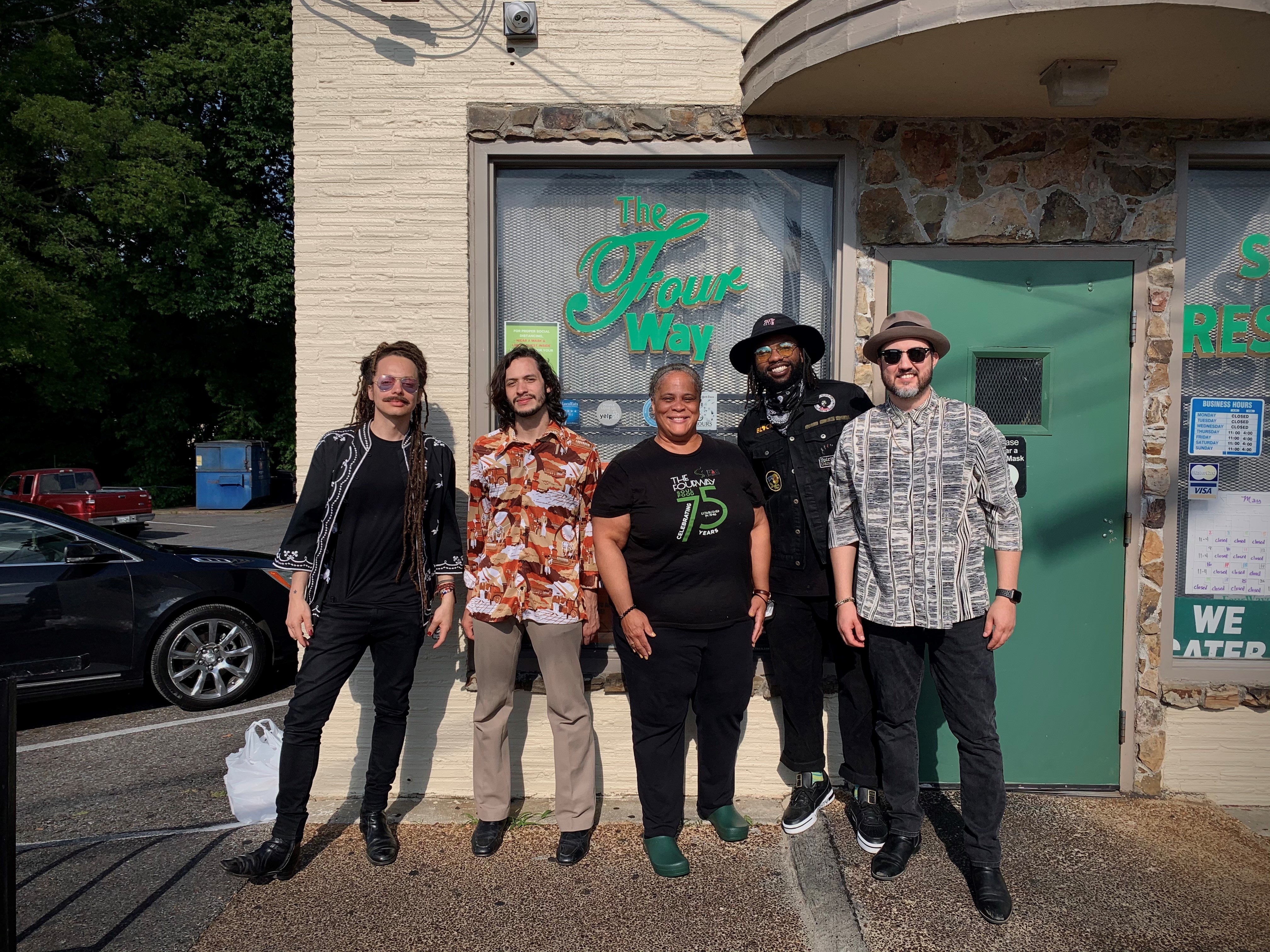
We met the Reverend in the parking lot of Four Way Soul Food restaurant,
a staple that in the 1970s became a natural meeting ground for the musicians
and the civil rights leaders. Hodges arrives and is a heavenly vision: head
covered with a shiny metallic hat and shoes to match. He is softspoken and warm
with humility as he leads us inside to break bread before the interview.
Talking over chicken wings and
fried green tomatoes, Young Almighty shares a connection to the Reverend's
music. "That's what I sing when the song comes on. Never thought I'd meet
the guy who played the part I loved about the song," said Young
Almighty smiling, referencing the opening notes on Al Green's "Love and
Happiness". I can picture the young boy in his living room, singing along
with the organ on the radio. Today, that boy met the radio in real life. With
bellies full, we pack into a cream colored 1955 Chevrolet and cruise down to
Royal Studios.
Hodges was a part of the house band at Royal Studios, Hi Rhythm, a
powerhouse group that churned out hit after hit. Al Green's "Love and
Happiness", Syl Johnson's "Take Me To The River", Ann Peebles'
"I Can't Stand The Rain"-- the list goes on and on. Twenty-six consecutive Gold Records were
cut during Hodges' legendary tenure as the house organist. Twenty-six is no fluke.
Something about these musicians was different, something connected universally.
The stew was delicious, but what was in the sauce?
With the Reverend as our guide, we
rolled five minutes past his neighborhood to the dilapidated birth-home of
Aretha Franklin-- a reminder that stars are born in darkness. Hodges is clear
when he describes his background: a musician who came from, grew up in, and
worked in an American ghetto. He described how becoming a father created the
need to bring money enough home to feed the family. A driving force to give his
artistry every ounce he could muster.
Hodges may have grown up in a ghetto and Al Green was the son of a
sharecropper, but together they made hits that went all around the world. A
difficult past can be overcome through music. Be it the ghost of slavery, the
hardship of migration, the violence of poverty-- artists who made the absolute
best music in America channeled their depth of experience, their heartache, to
churn out the hits the rest of us celebrate. We admire them for having the
freedom to express joy in the sorrow. It isn't easy to do. Any soul would be
lucky to do it just once. Charles Hodges and Hi Rhythm did it twenty-six times.
Twenty-six times that went around the world.